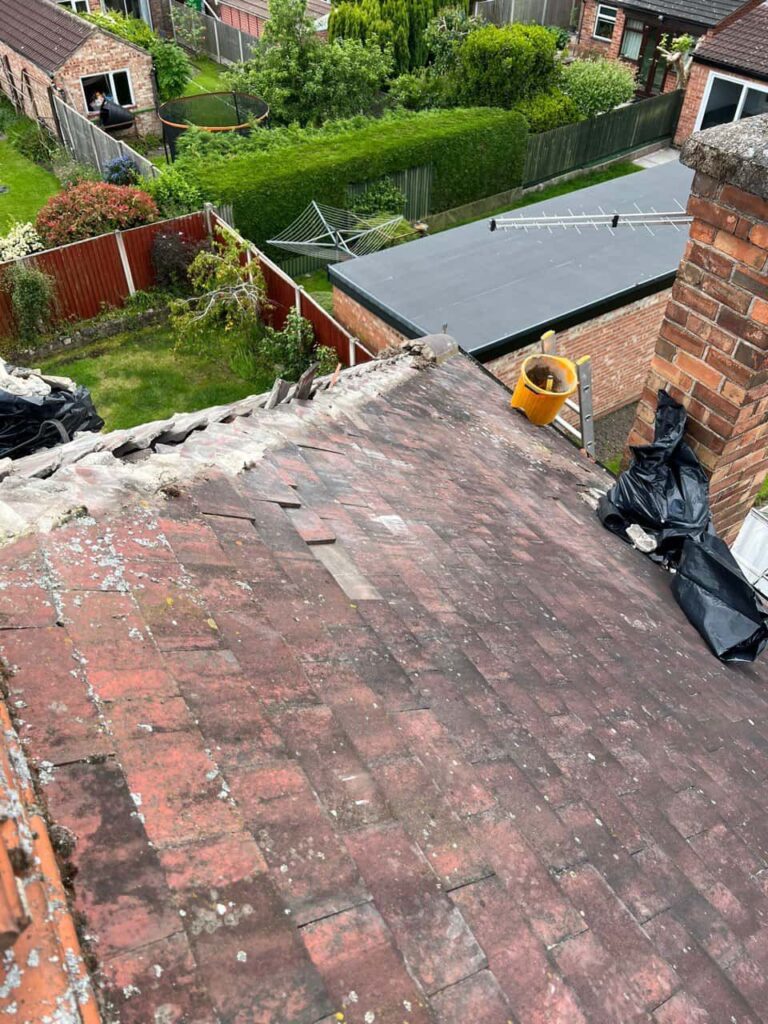
Flat roofs are designed to provide dependable protection while allowing rainwater to drain towards designated outlets. However, their relatively shallow pitch means that defects affecting the covering, joints or drainage system can quickly interfere with their performance.
Some warning signs are easy to recognise, while others develop beneath the surface before becoming visible inside the property. For homeowners in Wroughton, Wiltshire, knowing when to arrange professional flat roof repairs can help prevent a localised defect from affecting a much larger area.
Signs That Your Flat Roof Needs Professional Attention
A single symptom does not always reveal the full condition of a flat roof. Water may travel between layers, and visible surface damage may extend further than it first appears. The following signs indicate that a professional inspection would be advisable.
Water Pooling on the Surface
A flat roof is not completely level. It should have a slight fall that directs water towards an outlet, gutter or drainage point.
Standing water that remains long after rainfall may indicate poor falls, a blocked outlet or movement within the supporting deck. Persistent pooling places prolonged pressure on seams and vulnerable sections of the covering. It can also collect dirt and encourage organic growth, further restricting drainage.
The cause should be identified rather than simply removing the visible water.
Cracks, Splits or Open Seams
Flat roofing materials expand and contract as temperatures change. Over time, this movement can contribute to cracks, splits and separation at joints.
Even a narrow opening may allow rainwater beneath the outer covering. Once moisture becomes trapped between layers, the affected area may be considerably wider than the visible split. Professional assessment is needed to determine whether the defect is isolated or whether the surrounding material has also weakened.
Blisters and Raised Areas
Blisters form when air or moisture becomes trapped beneath the roof covering. As the surface warms, the trapped material expands and creates a raised area.
A blister may remain intact for some time, but foot traffic, further movement or weather exposure can cause it to split. Cutting or pressing down the raised section without understanding what lies underneath can create additional entry points for water.
A Soft or Spongy Surface
A flat roof should feel firm underfoot when inspected safely by a professional. Soft, springy or spongy areas may indicate that moisture has reached the insulation, boarding or supporting deck.
This type of deterioration is not always visible from above. Surface patching alone may be insufficient if the materials underneath have lost their strength. The affected layers need to be examined so that the repair addresses the full depth of the problem.
Damp Patches Inside the Property
Water staining on ceilings or walls is a clear indication that moisture has entered the building. Other internal warning signs can include peeling paint, mould growth, discoloured plaster or a persistent damp smell.
The visible stain may not sit directly beneath the roof defect. Water can travel along the deck, insulation or internal timbers before appearing indoors. Accurate leak tracing is therefore essential before repairs begin.
Damaged Roof Edges and Upstands
The edges of a flat roof and the points where it meets adjoining walls are particularly vulnerable. These areas depend on secure trims, flashing and upstands to stop wind-driven rain from passing beneath the covering.
Loose edge details, cracked seals or separated flashing can allow water into the roof even when the main surface appears sound. Junctions around roof lights, vents and other penetrations should also be included in the inspection.
Blocked or Ineffective Drainage
Leaves, moss and other debris can obstruct outlets and gutters. When water cannot drain efficiently, it may spread across the roof or rise against details that were not designed for prolonged submersion.
Repeated blockages may also conceal an unsuitable fall or a poorly positioned outlet. Clearing debris can restore drainage in some cases, but recurring standing water requires a closer assessment of the roof’s design and condition.
Surface Material Is Lifting or Deteriorating
Raised edges, loose sections and visible surface wear can indicate that the roof covering is losing adhesion or becoming brittle. Wind can enter beneath lifted material and gradually enlarge the affected area.
Granular loss, cracking and general weathering may also show that the covering is approaching the end of its effective service life. The extent of deterioration determines whether a local repair remains practical or a more comprehensive solution should be considered.
Previous Repairs Are Failing
An older flat roof may contain several patches applied at different times. A sound repair can remain effective, but repeated patching can make future leaks more difficult to diagnose.
If water is appearing close to an earlier repair, the original defect may have reopened, moisture may be trapped underneath, or a neighbouring section may now be failing. The entire repaired area should be inspected rather than adding another surface seal without confirming the cause.
When Should You Arrange an Inspection?
Professional attention should be arranged when:
- Water continues pooling after dry weather
- Cracks, splits or open joints are visible
- Blisters or raised sections have developed
- The surface feels soft or uneven
- Damp patches appear indoors
- Flashing or roof edges have lifted
- A previous repair has started leaking again
- Drainage problems keep returning
Prompt investigation helps determine whether the issue is confined to the waterproof covering or has reached the layers beneath it.
Why Professional Diagnosis Matters
Flat roof repairs depend on identifying both the entry point and the extent of moisture penetration. Treating only the visible symptom can leave damp materials trapped below the surface and allow the problem to return.
A professional roofer can examine the covering, seams, edges, penetrations, drainage and accessible supporting materials. This provides a clearer basis for deciding whether a targeted repair will be effective or whether wider remedial work is needed.
Conclusion
Pooling water, cracks, blisters, soft areas, damaged edges and internal dampness can all indicate that a flat roof requires professional repairs. Because moisture can spread beneath the visible surface, early assessment is important even when the external defect appears minor.
LJ Roofing Wroughton can inspect your flat roof, locate the source of the problem and recommend an appropriate repair based on its overall condition. If you have noticed signs of deterioration or water ingress, contact our team to arrange a professional roof assessment in Wroughton, Wiltshire.
Call us on: 01793 569 293
Click here to find out more about LJ Roofing Wroughton
Click here to complete our contact form and see how we can help with your roofing needs.