A well-executed roof repair should restore weather protection and resolve the underlying defect. However, repairs can deteriorate when materials age, movement affects the repaired section or the original source of the problem was not fully identified.
A returning damp patch is an obvious warning sign, but repair failure can also appear through less noticeable changes to tiles, mortar, flashing or flat roofing materials. Recognising these signs early can help prevent moisture from spreading into a larger section of the roof.
How Can You Tell Whether a Previous Roof Repair Is Failing?
The repaired area should be considered alongside the surrounding roof. In some cases, the repair itself has weakened; in others, deterioration nearby has compromised an otherwise sound section.
1. Damp Marks Have Returned
If staining reappears on a ceiling, wall or chimney breast, water may once again be entering the roof. The mark does not always develop directly beneath the failed repair because moisture can travel along underlay, rafters and other internal surfaces before becoming visible.
Pay particular attention to stains that darken after rainfall. Even if they dry between periods of wet weather, repeated moisture indicates that the roof is not remaining fully weatherproof.
2. Tiles or Slates Are Moving Around the Repaired Area
A tile or slate that has slipped out of alignment may indicate failed fixings, weakened battens or movement in adjacent materials. If earlier work addressed only the visible covering, a concealed problem may still be present beneath it.
Movement close to a repaired section can create gaps through which wind-driven rain enters. It may also place additional strain on neighbouring tiles, allowing the affected area to expand.
3. Repair Mortar Is Cracking or Breaking Away
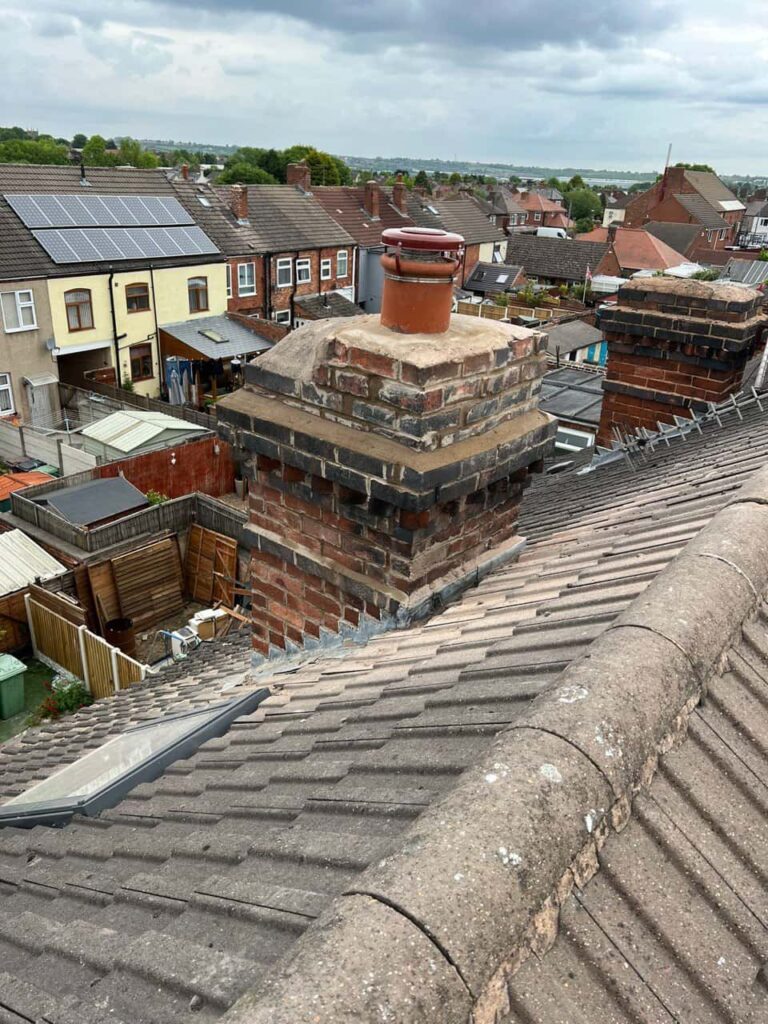
Mortar is commonly found around ridge tiles, verges and some chimney details. Cracks, loose sections or fallen fragments can show that the mortar is no longer providing secure support or effective weather protection.
Applying new mortar over unstable material is unlikely to produce a dependable result. The loose material must be removed, and the condition of the tiles and underlying bedding should be assessed before the detail is reinstated correctly.
4. Flashing Has Lifted or Separated
Flashing seals vulnerable junctions around chimneys, walls and changes in roof level. If it lifts, splits or pulls away from the adjoining surface, rainwater can pass behind it.
A failed flashing repair may not leak during every period of rain. The direction of the wind and the volume of water flowing across the roof can determine whether moisture reaches the opening. This intermittent behaviour can make the defect difficult to trace without a thorough inspection.
5. A Flat Roof Patch Is Lifting or Cracking
Repairs to felt and other flat roofing systems must remain firmly bonded to the surrounding surface. Raised edges, cracks, bubbles or splits can indicate that a patch is losing adhesion or that moisture has become trapped beneath it.
Standing water near the repaired area may increase the problem. If the roof does not drain effectively, repeated exposure can weaken laps and repaired joints. The surface and the reason for the water retention should both be investigated.
6. The Same Problem Keeps Returning After Poor Weather
A repair that appears successful in light rain but fails during prolonged rainfall or strong winds may not have addressed the complete route of water entry. Wind-driven rain can reach gaps that are not affected under calmer conditions.
Recurring defects may also indicate that the visible damage was only one part of a wider issue. Deteriorated underlay, defective junctions or weakened materials nearby can continue to admit water even after the original repair has been treated.
Why Can a Roof Repair Fail?
A repair may deteriorate for several reasons, including:
- The original cause was incorrectly identified
- Only the visible symptom was repaired
- Surrounding materials were already weakened
- New materials did not integrate correctly with the existing roof
- Drainage problems continued to affect the area
- Natural movement placed stress on joints or fixings
- The roof developed a separate defect nearby
Determining the reason for failure is essential. Repeating the same repair without addressing the underlying cause may provide only temporary improvement.
Why a Wider Roof Inspection Matters
The most visible defect is not always the point where water enters. A professional inspection should assess the earlier repair, adjoining tiles or roof coverings, fixings, junctions and drainage routes. Where accessible, the roof space can also be checked for moisture, staining and damaged underlay.
This wider approach helps establish whether a targeted correction is sufficient or whether deterioration has spread beyond the original repair.
Conclusion
Returning damp, displaced tiles, cracked mortar, lifted flashing, failing flat roof patches and weather-related leaks can all indicate that an earlier roof repair is no longer performing correctly. Prompt investigation can identify whether the repair has failed or whether another nearby defect is responsible.
LJ Roofing Wroughton provides professional roof inspections and repair services in Wroughton, Wiltshire. If a previous roofing problem has returned, contact our team to arrange an assessment and determine the correct remedial work.
Call us on: 01793 569 293
Click here to find out more about LJ Roofing Wroughton
Click here to complete our contact form and see how we can help with your roofing needs.